Announcement

This site will be migrating to a new address.
Please visit me at @Køkken and change your subscription to this blog to my RSS Feed

You Will Be Redirected!

Please do not leave any more messages on this blog. I will not be publishing or responding to any more comments left here. You will be automatically redirected to http://www.atkokken.com All posts have been migrated. You will be able to locate any posts by performing a quick search at my new site. Thank you.

Thursday, February 25, 2010

Chocolate Brownies

Brownie Stack

Brownie1

Brownie 4

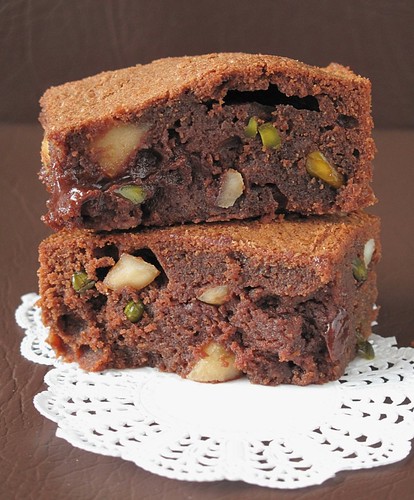
I am probably going to get alot of flak for this but I have to say this anyway. I have never liked brownies. Facing trays of chocolatey brownies on many occassions, I have never had the impulse to help myself to them. I am trying to rationalise my reaction, struggling to find the right words to express my lack of zest or excitement for them. Brownies, to me are coarse, rich but bland - that's the best I can do until I came upon Dorie Greenspan's opening to Pierre Hermes Moist and Nutty Brownies Recipe, I found the exact words that depict my feelings toward this American all-time favourite pastry : insipd, indifferent. It lacks the sublime quality I fall for in French or Japanese pastries. I am not good at handling an overload of the richly rich... my appetite would go on strike and shut down completely. For example, I do have a weakness for chocolates but I would take them in small doses. 2 little truffles made from the best quality chocolate will keep me sailing in bliss for days (well, maybe 1 day)  hence my box of Valrohna chocolate squares can last me for weeks.

So why have I chosen to bake brownies then? ... because I have a dinner gathering coming up and my friends seem to like brownies.... and because Dorie Greespan had written that this recipe is a prime example of Brownies of the sublime variety. Made with good quality bitter sweet chocolate, an abundance of butter and generously studded with nuts - they are baked to just set at the surface;" the center of the brownie remains moist - very moist."  I got mesmerised by her description and decided to give it a try.

It was easy enough for I have loads of good quality chocolate in my fridge, blocks of French butter in my freezer and some macadamia nuts from a previous bake. These turned out to be short so I had to top up with some pistachio nuts in my chiller.

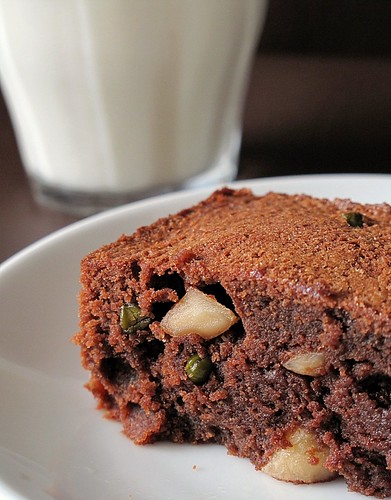
I did a small trial batch which yielded about 9 squares. I am not quite happy wth the way they look. I have a feeling I might have overaerated when I creamed the butter for it did not turn out as compact as the photo in the cook book. And even though I had baked as instructed at 180C x 20mins, the center still seems a little gooey - unsure if this is actually the Very Moist sublime quality as depicted by Dorie Greenspan.

Verdict? ... certainly moist and delightful. Sumblime? Not really... at least I have not achieved it yet.

Recipe :

145 g             Bitter sweet chocolate, preferably Valrohna Caribe. (I used Tainori)
260 g             Unsalted butter
4                    Large Eggs
250g              Sugar
140g              All purpose flour
145g              Pecans or walnuts, lightly toasted and very coarsely chopped.

1. Preheat oven to 180C. Prepare a 24x 30cm baking tray. Line bottom with a piece of parchment paper, butter the paper and dust the inside of the pan with flour.
2. Melt chocolate in microwave. Cool down to 45C before use.
3. In a bowl, cream butter with rubber spatula. Consistency of butter should be smooth and creamy but not airy. Stir in chocolate, egg (lightly beaten), sugar followed by flour and nuts.
4. Pour batter into baking tray and smoothen surface with spatula.
5. Bake for 19- 22mins; at this point the top of the cake will be dry but a knife inserted in the center will come out wet.  Transfer the pan to a cooling rack and allow brownies to cool.

Monday, February 22, 2010

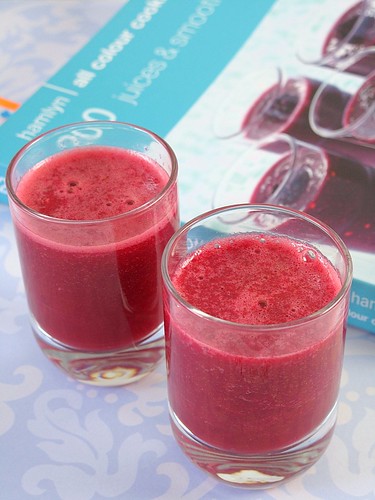
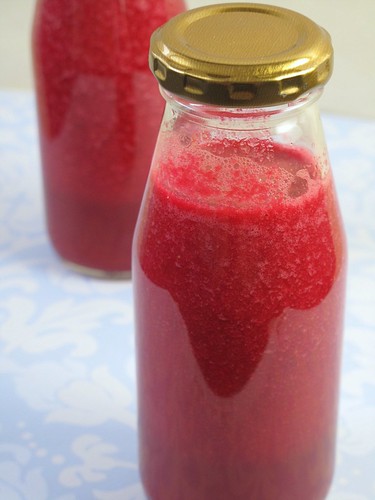
Staying Healthy With Beetroot Juice

Beetroot 3-1


Beetroot bottle

Beetroot 7

Beetroot is seldom featured in Asian cooking...at least I don't remember seeing this in any Chinese dishes.
I do vaguely remember trying to use this in a salad once but, I didn't quite like the way it bled like an open wound making the dish look like someone just had a bloody fight over it...  This is also a vegetable that is not quite readily available at our local supermarkets. The benefits of the beetroot has been gloriously lauded. It is definitely a detox superhero. Reputed to be one of the best liver-cleansing vegetables, it also helps to nourish the nervous system and brain with trace metals and folate. Betacyanin, the pigment responsible for the deep red colour of the vegetable is also a powerful antioxidant.

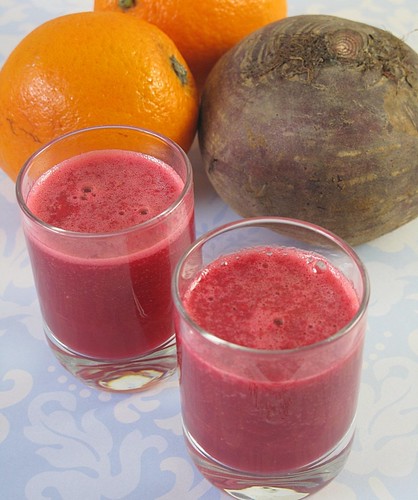
The more I read about the benefits of beetroot, the more I feel I should find some way to incoporate this into my diet. The easiest option is to turn to my juicer. There are no shortage of recipes for beetroot juice on the internet. The version I have picked is from my little juice book which consists of 2 other power food , the carrot and orange.
The good thing about a beetroot juice is, the natural beet sugar actually makes a pleasantly tasty drink - no dread about gulping down liquid grass.

And oh,... one more tip for friends in Singapore- you can find beetroot in Carefour , Cold Storage but the cheapest beetroot can be found..... at Little India!

So eat beetroot and be healthy!

Beetroot Juice 2

Recipe :

250 g              Carrot
125g               Beetroot
1                     Orange
125g               Strawberries (optional)

Process:

1. Juice the carrot, beetroot and orange to get juice.
2. If using strawberries, transfer juice from (1) into processor with strawberries and blend until smooth.

Saturday, February 20, 2010

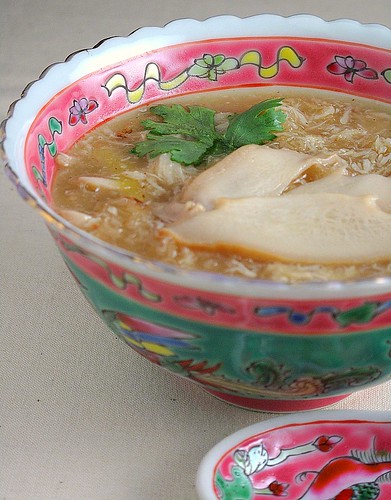
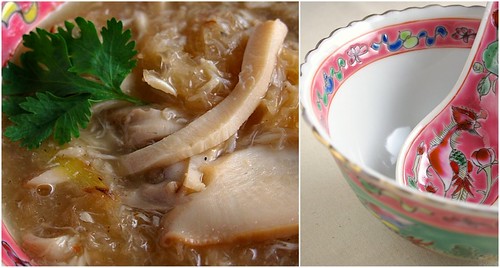
Fish Maw Soup - More CNY Leftovers

Fish Maw Soup 7


Fish Maw Soup

Picnik collage

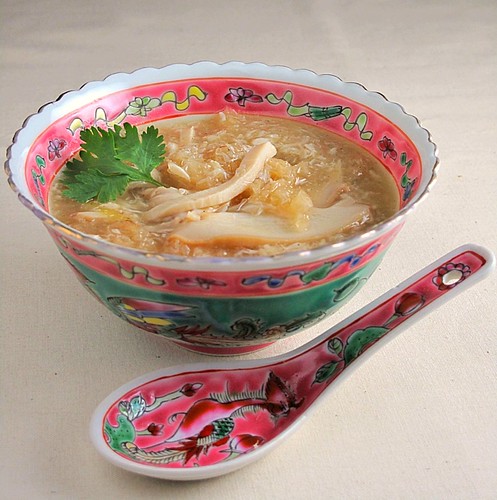
There is a conflict of interest, trying to go on a diet and clearing out the refrigerator.... It is sinful to waste but the digits on the weighing scale has to, has to go down! Keeping the carbs at bay, a simple option is to make a soup that is easy on the digestive system. Trying my best to finish off the last bit of crab meat, I decided to make some fish maw soup. I had once joked with a friend - if there is a war or a major disaster that confines me to my apartment, I probably can feed off my larder for one whole month!  I probably can start a blog project to 'cook my way through my larder' and would probably be able to come up with an interesting mix of western, asian dishes with chocolates and pastries to boot!

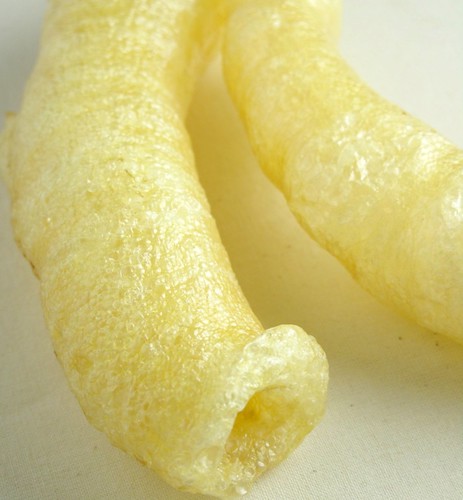
I don't think I will ever become a vegetarian but fish maw soup, is a more responsible alternative to shark's fin soup. I have cut down my intake of shark's fins and have made it a point to replace the shark's fin soup with other alternatives when I plan for business dinners at restuarants. Fish maw, for those who are not familiar,  is actually the air bladder in a fish. This internal organ helps the fish to control its bouyancy in water. In Asia, we can buy this easily in supermarkets and dry food provision stores. One of the most convenient form to use is the dried, deep fried version.
Fish Maw

I used to have problem differentiating these with deep fried pork skin. They look very similar after deep fried but taste very different. The fish maw has a mild soft crunch and when cooked in soup or gravy, soaks up the flavour of the stock like a sponge. Deep fried pork skin, when cooked in soup, tends to be more rubbery and I can always still detect a porky smell.

The deep fried fish maw has to be soaked to soften before cooking and I would recommend to run it through some hot water to remove excess oil and the fishy smell.

A very simple soup that can be prepared in a jiffy and in my opinion, has more texture and crunch than the shark's fin. Oh, I forgot I also happen to have some cooked abalone from CNY which I cut into fine shreds for a more luxurious and tasty treat.

Fish Maw Soup 3


Recipe :
Cooked crab meat               1/2 bowl
Fish maw                             1 tube, soaked to soften and cut into fine strips
Young ginger                        2 slices
Garlic                                   2 cloves
Chicken stock                      2 bowls
Abalone                               Mid size, cut into strips

Salt                                       to taste
Pepper                                  dash
Chinese Rice wine                 1tbsp

Tapioca starch

Method:

1. Heat oil in a hot wok. Stir fry garlic and ginger quickly until fragrant. Add crab meat and fish maw.
2. Add 1 tbsp of Chinese Rice Wine and stir fry crab meat and fish maw for a minute.
3. Add chicken stock and bring to boil.
4. Lower heat to simmer for 2 minutes. Remove the slices of ginger and garlic. Season with salt and pepper.
5. Mix one 1/2 tbsp of starch flour with 1tbsp of water.  Add this a little at a time to the boiling soup and check for thickness. Do not over starch the soup.

Thursday, February 18, 2010

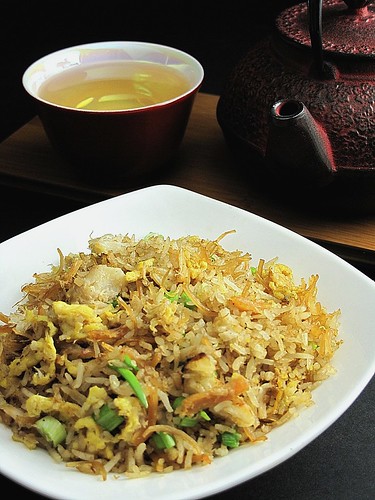
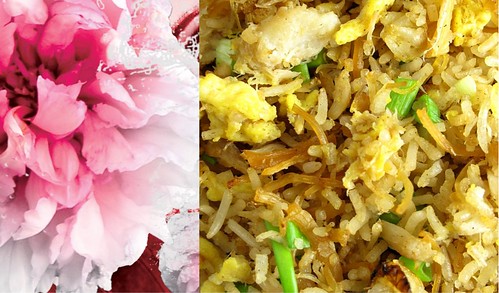
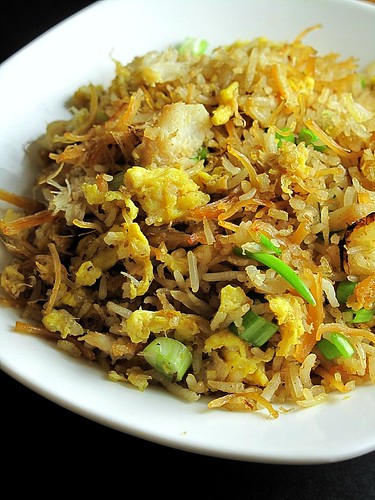
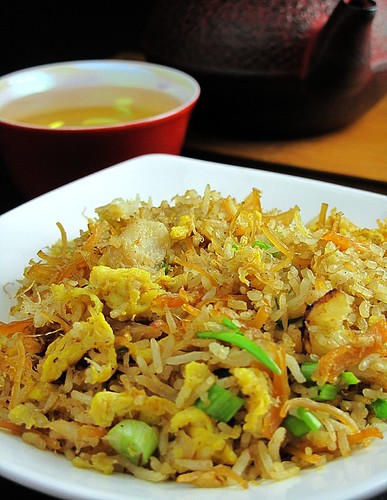
Dried Scallops, Crab Meat Fried Rice - Working With Left Overs From CNY 2.....

Scallop Fried Rice2


Fried Rice Collage

Scallop Fried Rice 6

I am cooking my way through my refrigerator... Left with a copious amount of white rice, the easiest way is to fry them and for this New Year, in an effort to eat more healthy, we have decided to cook basmati rice instead of Thai Fragrant Rice. Basmati Rice, for those who are unfamiliar, is a special long grained rice popularly eaten in India.The best Basmati rice is grown in India and Pakistan. When cooked, these are drier, less starchy than normal long grained rice, yielding a free flowing consistency. Some interesting facts about Basmati : a cup of cooked Basmati Rice has 170 calories while a cup of long grained rice carries 205 calories. Ayurveda, the traditional Indian healing approach recommends the Basmati rice. "That is because basmati rice is easy on the digestive system. Also, it is saatvic or pure, and balances the physiology. Basmati rice builds body tissue and is very high on praana or vital life energy,"

In addition to its holistic properties, Basmati Rice, in my opinion is perfect for Fried Rice because it is drier and hence looser. It doesn't get soggy or lumpy - every rice grain is beautifully separated. I have some crab meat in my fridge and hence I decided to pair it with some shredded dry scallops for sweetness and fragrance.

The end result?... I meant to pack this for lunch for work tomorrow but I ended up finishing everything , Sigh... there goes my watchful diet.

Scallop Fried Rice 3

Recipe :
Cooked Basmati Rice         1 bowl
Dried Scallops                    2 ( about 2cm diameter)
Cooked crab meat              1/3 bowl
Spring onions                      For garnishing.
Garlic                                 2 small cloves bruised with back of knife.
Ginger                                2 slices
Chinese Rice Wine (Hua Tiao) 
Soya sauce
White pepper powder
Egg                                     1, beaten


Method:
1. Place dried scallops in a small bowl, with 2 sprigs of spring onions and 2 slices of ginger. Add a dash of Chinese Rice wine and steam over boiling water for 10 mins until softened.
Cool down and shred scallops.

2. I did the same with the crab meat just to remove the fishy smell a little.
3. In a hot wok, add oil. Add bruised garlics to infuse the wok with the fragrance of the garlic. Add shredded scallops, crab meat. Fry briskly over hot fire. Add Basmati Rice. Continue frying to mix flavours of the scallop and crab meat with the rice.
4. Season with soya sauce, lots of white pepper while frying.
5. Pushing the fried rice to one side, add a little oil and add beaten egg. When egg begins to set a little, mix the fried rice with the egg to coat rice with egg. Continue frying until egg is cooked.
6. Add diced spring onions and turn off heat.

Wednesday, February 17, 2010

Chicken Congee - Working With CNY Left Overs...

Gai Chok 6


Gai Chok 8


Gai Chok4

Now that the 3 day holidays is over, it's back to work again, though I believe there are a few lucky ones who are either taking leave or are still waiting for that auspicious date to start the first working day of the New Year.

While there are some people who are starving in some remote corner of the globe, those many of us who are lucky enough to celebrate Chinese New Year, all had too much to eat. So much that our fridge is still chock-a-block with left overs from the festive over indulgence - a twisted superstitious view literally mandates that there must be left overs - the one who does not have left overs during the New Year may end up suffering the fate of not having enough to eat, to spend , to survive - so God forbid that we should clean our plates at the dinner table!
Albeit all  my festive meals were had at my family's place and restuarants, my own fridge is still packed - with left overs... from my mother's fridge! Sigh! I only hope I can recycle them fast enough before they turn bad.

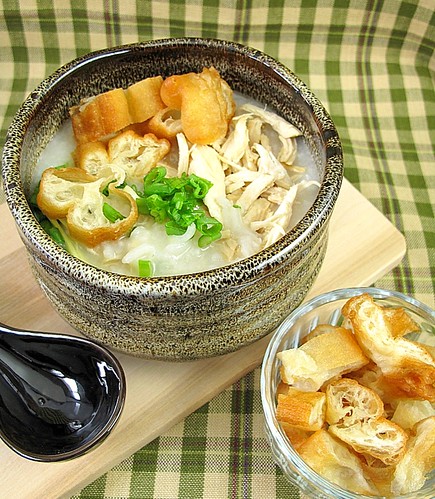
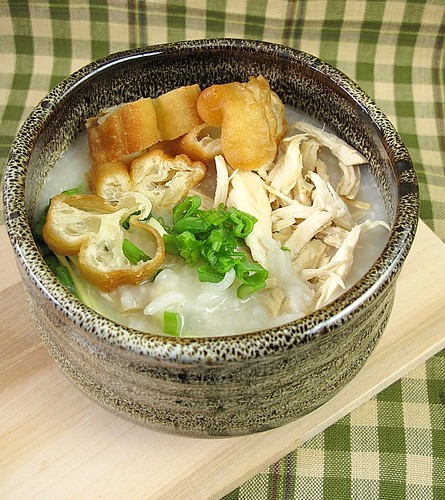
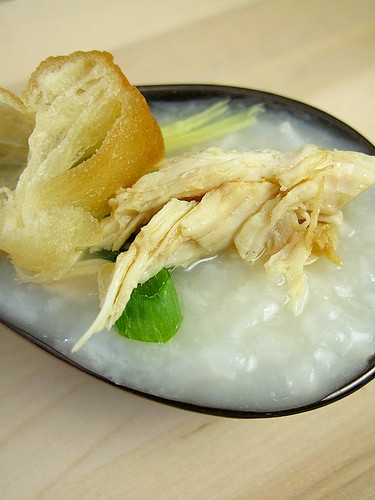
First on the list is half a chicken. I decided to cook Gai Chok (Chicken Congee) prepared the Cantonese way to achieve a smooth, velvety glue like texture as oppose to the loose grainy version of the Teochew Porridge. Grainy or gruel like, plain or savoury, I like them all. In my opinion, this is the best comfort food there is. Light yet sustaining, warm and soothing, the porridge is the type of food we turn to when :
1. we are too sick to have an appetite to chew and digest;
2. feeding the very young and very old where a semi fluid food is most easily consumed;
3. in this case, the stomach still feels heavy from 4 consecutive days of festive binging.
There are a few school of thoughts when it comes to achieving the glue like consistency of the Cantonese congee. I have once seen a cooking program in Hong Kong where the cook/presenter demonstrated boiling the rice over huge quantity of water over very strong fire. What happens is the rice will split. By controlling the amount of water/liquid, the congee can become viscous in consistency. However, this method of cooking will not impart the velvety creaminess to the congee. To achieve that, typically, a combination of Jasmine rice (Thai fragrant rice) and glutinous rice is used.
I came across a third method in one of the Chinese cookbooks on my shelf. Written by the well published Mrs Leong Yi Soo, the book 温馨佳肴 (Singapore Well Loved Recipes) contains a recipe for Gai Chok that calls for the addition of glutinous rice powder to achieve the creamy, glue like consistency. It is this recipe that I tried today.

Gai Chok 7
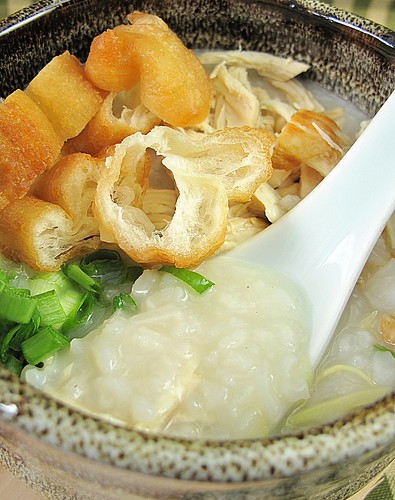
The texture,soft and smooth, slides down the throat effortlessly to gently coddle the hungry stomach into rested satisfaction.

Recipe :

Thai Rice                      1cup (about 120g)
Water/ Chicken Stock  1.5litre with more hot water on standby
Glutinous Rice Flour      1 tbsp mixed with 100ml water and mixed well.

Chicken                         I used left over chicken. If start from scratch, cook about 800g in 2.8litres of water
                                      seasoned with salt, pepper and 2 slices of ginger.
Sesame Oil
                                     
Garnish
Fried Chinese Croutons (You Tiao)
Shredded Young Ginger
Spring Onions, diced

Method :
1. Chicken - shred cooked chicken meat  and season with a little soya sauce and sesame oil.
2. Wash Rice and coat with a few drops of sesame oil.
3. In a heavy saucepan, add water, rice, pinch of salt, 2 slices of young ginger. Bring the water to boil. Once water starts to boil, reduce heat and boil the congee gently until rice starts to split and turns viscous. Add hot water or chicken stock if the mixture becomes to thick before the rice is cooked. Stir the congee at intervals to prevent the rice from sticking to the saucepan.
4. Once rice has split and turns viscous, add in the glutinous rice flour/ water mixture and stir continuously until the congee becomes a smooth creamy consistency. Add more hot water if the congee becomes too thick.
5. Ladle into serving bowl. Garnish with shredded chicken, shredded ginger, You Tiao and diced spring onion.

Tuesday, February 16, 2010

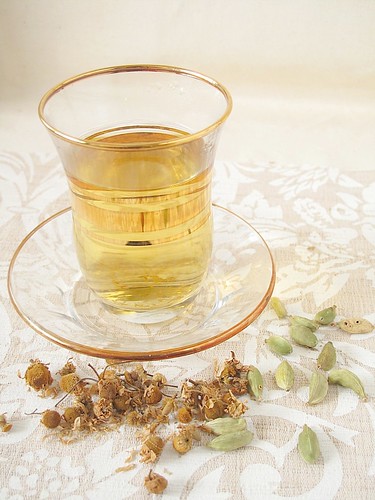
Detox, Detox - Ginger Tea & Cardomom Chamomile Tea

Ginger Tea 2

Camomile Cardamom Tea

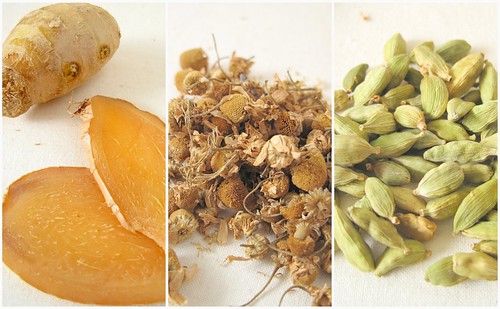
Detox Heroes Collage

I don't want to see another pineapple tart, another peanut cookie or another slice of Kueh Lapis. I have sinfully, shamelessly over eaten. My digestive tract has been so overstuffed that the sight of even the most delectable food begins to irk me. I can feel a constant bloatedness. It has only been 2 days and I have actually taken care to skip breakfast and only eat lunch and dinner but still I can literally feel the wall of my stomach and digestive tract lined with a stubborn layer of fat, undigested goo...

I have to work off some of those extra calories and purge the rest out fast! After taking my bike out for a 20km spin, I feel decidedly  revitalised. I may be imagining it, but I thought my tummy felt a little less bloated after the workout.
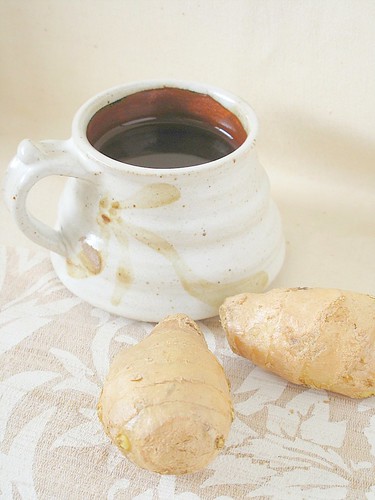
One of my favourite ingredients for relieving digestive problems and bloatedness is the trusted ginger. As I searched for alternative remedies to aid digestion, I also found a Cardamom and Chamomile Tea which not only helps in digestion but will serve well as a nightcap for a restful sleep as well. Most of us will know the calming effect of chamomile tea and those who frequent Indian restuarants will be familiar with the way they would serve cardamom at the and of a meal to freshen breath and aid digestion.
The beauty of it all is , I have all the ingredients in my larder (yes, again!) - so no sweat and no extra money to be spent :-)


Recipe :

Cardomom & Chamomile Tea
2 tbsp          loose leafed Chamomile Tea.
8                 Cardamom pods,crushed
1 litre           Water

Ginger Tea
100g              Fresh ginger, thinnly sliced
1.5 litres         Water

Method :

Cardamom & Chamomile Tea
1. Combine ingredients in a small saucepan and bring to boil.
2. Reduce heat, simmer, uncovered for 5 mins. Cool 5 mins, strain.


Ginger Tea
1. Combine ingredients in medium saucepan, bring to a boil.
2. Reduce heat; simmer, uncovered about 15mins or until liquid has reduced by a third.
Cool 5 mins and strain. (for those who are unaccustomed to the spiciness of ginger, a tsp of honey can be added to sweeten)

Sunday, February 14, 2010

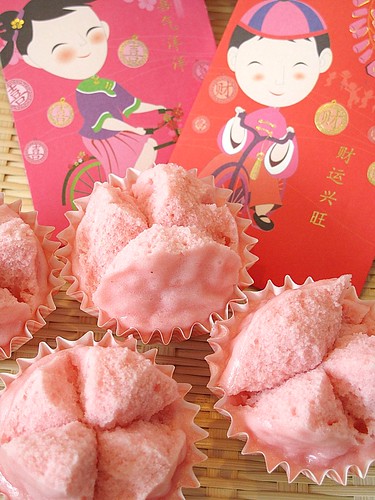
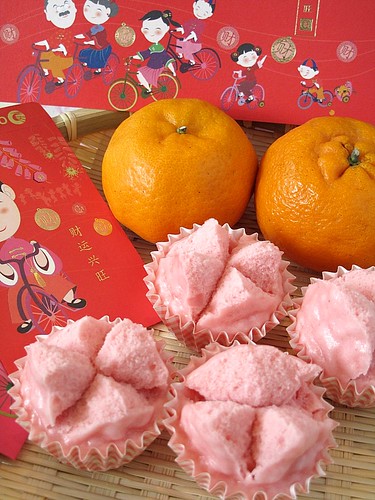
Good Luck , Good Wealth With Huat Kuey - Steamed Rice Cake

Huat Kuey 3

Picnik collage

Huat Kuey 2

Happy Chinese New Year and may the year of Tiger bring lots of good wealth, good health, good food to one and all!

A quick one before I scuttle off for New Year Lunch. I choose to make a traditional steamed rice cake today. Known as Huat Kueh (发糕), these dense little cake are more symbolic than tasty. The Chinese pronounciation of the name of this cake is akin  to the meaning of to rise higher and prosper. Hence, it is a firm favourite during celebratory religious rituals. I do remember hearing stories from my aunties and older relatives relating the superstition connected to the making of this cake. Kids were always told to shut up when the cake is being steamed, for fear that if something offensive is said, the kitchen god/ cake fairy may become angry and the cake will not rise. A flopped Huat Kuey, to the superstitious, signifies a full year of bad luck.

Hence it was with a little trepidation that I made this today. Of course, I kept mum throughout the whole process and restrained from giving in to my impatience of lifting the lid to peek at the cake . I was really really pleased with the results. Perhaps this success would signify good luck for me in the year of the Tiger?... I am keeping my fingers crossed. :)

Recipe :

180g           Sugar
180ml         water
200g           cake flour
50g             rice flour
2 tsp           baking powder
food colouring

Method :

1. Boil sugar in water until dissolved. Set aside to cool.
2. Sift cake flour, rice flour and baking powder together. Combine with sugar syrup. Mix well to combine.
3. Add colouring.
4. Portion into paper cups. Steam over high heat for 20mins.

LinkWithin

Related Posts with Thumbnails